


We don’t build a corporation. We build a team.
An environment for people who want to make an impact, grow, and take a hands-on approach.
The GAUS Team – passion driven by precision
Industry looks different from the inside
Small company. Big impact.
Why working in a smaller organization offers more growth than a corporation?
-
- decisions are made quickly,
- everyone has a real impact on projects,
- employees see the entire process, not just a fraction of it,
- responsibility translates to faster skill development.
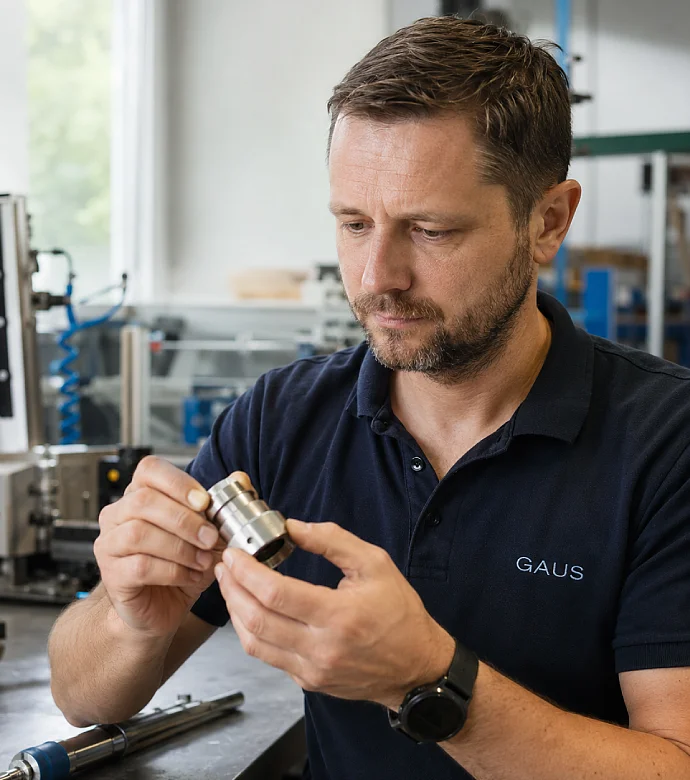
You are not just a number in a structure
In large organizations, work often means executing a small fragment of a larger process. The scope of duties is precisely defined, decisions must go through multiple levels of approval, and an individual's impact on the company's growth can be severely limited.
At GAUS, we operate differently.
We are an organization with a flexible structure, allowing us to make decisions quickly, efficiently implement new solutions, and develop projects without corporate barriers. This is an environment where engagement, independence, and the drive to act truly matter. Working at GAUS, you are not confined to a narrow scope of responsibilities. You have the opportunity to learn about processes from the operational, logistical, commercial, and organizational sides. You see the real impact of your work on the company's performance and on projects executed for industrial clients. This is exactly why skill development happens faster here than in many large organizations. Responsibility is not an add-on to a position — it is a natural part of daily work. You learn to make decisions, cooperate with clients, organize processes, and solve real business problems. We believe that a modern company does not need to be a massive corporation to execute ambitious projects and compete with the biggest players in the market. The advantage can be speed of action, partner-driven cooperation, and people who have a real impact on the organization's growth. That is why at GAUS, we are not just looking for people to complete tasks. We are looking for individuals who want to co-create the company, grow along with it, and feel that their work truly matters.
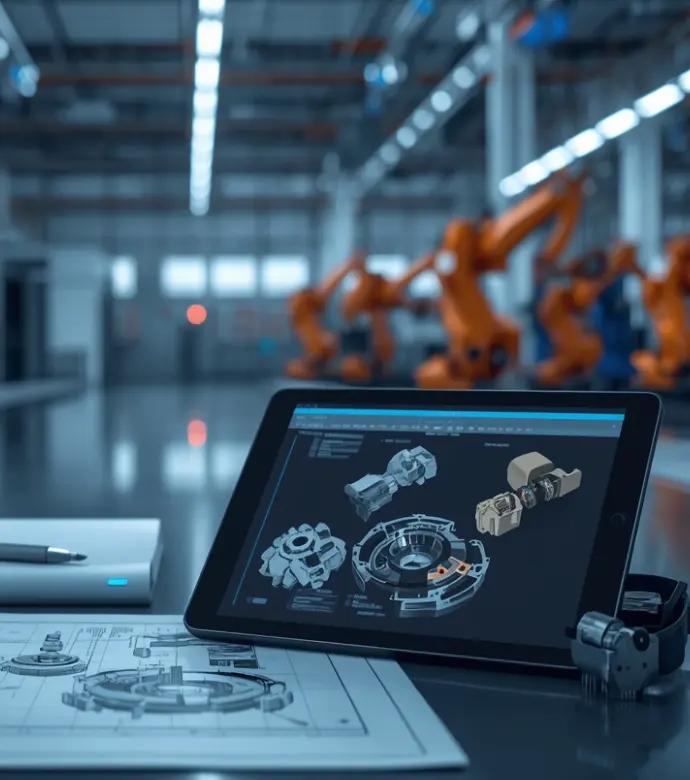
What does growth look like at GAUS?
Hands-on skill development.
-
- growth through participation in real-world projects,
- direct contact with industrial clients,
- opportunity to learn about logistics, purchasing, technology, and process organization,
- learning business responsibility.
Growth through action, not presentations
Many companies talk about growth. Most often, this means a training system, predefined career paths, and long presentations describing processes. At GAUS, we believe that we learn best by doing.
That is why growth in our organization is primarily based on participating in real-world projects and daily cooperation with industrial clients. From the very beginning of your work, you have the opportunity to learn about processes that have a real impact on the functioning of production, logistics, and procurement organization. Our business combines logistics, trade, technology, and the organization of purchasing processes. As a result, you can gain experience in multiple areas simultaneously — from client contact and delivery organization to process management and the development of modern solutions supporting the industry. At GAUS, you do not just learn theory. You learn decision-making, organizing your own work, and taking responsibility for the final outcome. This is an experience that is difficult to gain solely through training sessions or by working in highly fragmented corporate structures. Close teamwork is also of great value. We work as partners, exchange knowledge, and solve operational problems together. Thanks to this, growth is not confined to a single position — you naturally discover different perspectives of the company's operations. We believe that competencies are built through practice, engagement, and the opportunity to participate in ambitious projects. That is why at GAUS, growth is not an add-on to the job. It is a natural part of it.
Why do we value people with initiative?
Organizational culture.
-
- openness to ideas,
- no rigid hierarchy,
- opportunity to improve processes,
- employee influence on work organization.
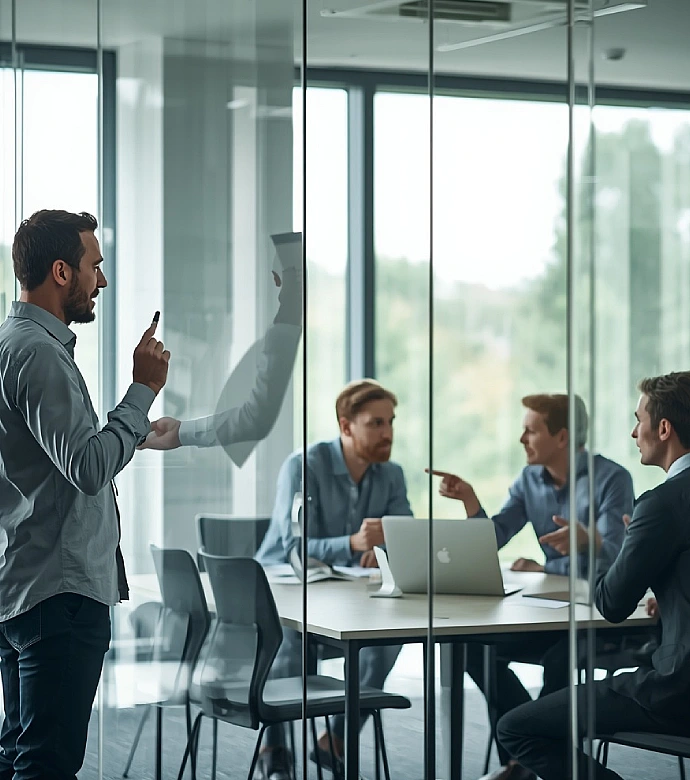
Ideas matter. But their implementation matters even more.
Many companies say they "value initiative." In practice, this often means that you can have an idea — as long as it does not disrupt anyone, does not alter the process, and preferably is neatly written down in a presentation.
At GAUS, we see it differently.
We are not interested in ideas that exist solely in meetings. We value people who can spot a problem, propose an improvement, and follow through to the end. Even if it means changing the way we operate, simplifying a process, or challenging something that "has always been done this way." We operate in an industrial and logistical environment where efficiency, organization, and speed of response truly count. That is why great solutions are often born not during months of analysis, but in the daily work of the people who actually handle the processes. We do not have bloated structures that separate decisions from action. If you see an opportunity to improve work, you have the space to talk about it and influence the organization of processes. Along with responsibility for the final outcome, of course.
This is precisely why we value independent individuals who think practically and are focused on finding solutions instead of creating problems. We do not expect "corporate initiative" that ends with merely submitting an idea. We much more value people who want to genuinely improve things and know how to take action. Because a modern organization grows not through slogans, but thanks to people who have the courage to enhance the reality around them.
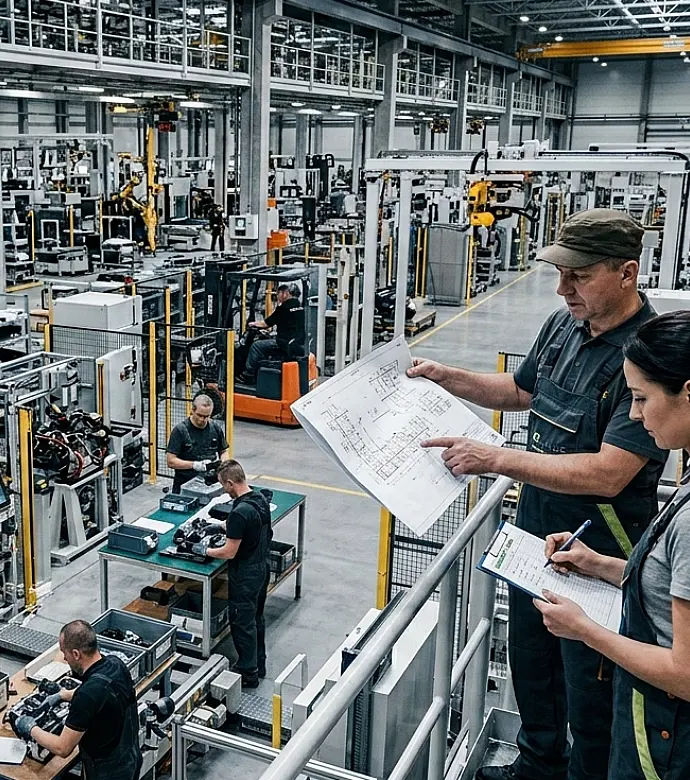
How do we work with industry?
Showcasing the scale and responsibility of projects.
-
- cooperation with manufacturing companies,
- logistics and supply continuity,
- VMI and DBSS systems,
- responsibility for clients' processes.
Behind the scenes of modern manufacturing
Most people only see the finished product. A car in a parking lot. A carton of milk in a shop. A binder sitting on an office shelf. A computer, a cable, a machine, packaging. At GAUS, we see something more every single day — an entire world of processes, decisions, logistics, and the people behind making sure these things can exist in the first place. Working with industry offers an extraordinary perspective. It is an opportunity to observe a reality that most people never see. A reality where thousands of small decisions, components, and processes determine every day whether a factory keeps producing, or if a line grinds to a halt due to the lack of a single part worth pennies. This experience very quickly changes how you view the world.
Suddenly, you realize that behind the simplest everyday products lies an immense scale of organization, responsibility, and cooperation. You see that modern industry is not an abstract theory from economics or management textbooks, but a living organism functioning under constant pressure of time, cost, quality, and availability. Working in this environment is also a clash with a reality that is far more practical than academic. It teaches humility toward processes that cannot be understood solely from presentations, models, or case studies. Here, problems are real, decisions have consequences, and the effectiveness of solutions is verified very quickly. At GAUS, we cooperate with manufacturing companies and support the processes responsible for supply continuity, logistics organization, and production component management. As a result, we participate in something much larger than standard order processing — we observe from the inside how the modern economy functions.
This is exactly why the experience gained from working with industry is so developmental. It allows you to understand what the world of production, organization, and process responsibility — on which the daily lives of millions of people depend — really looks like. And after that, it is hard to look at reality the same way as before.
The energy of youth and the experience of practitioners
Blending competencies and generations.
-
- young people bring momentum and new ideas,
- experienced professionals help build stability,
- cooperation instead of competition,
- knowledge exchange.

We combine energy with experience
In the business world, youth and experience are often pitted against each other. Some bring a fresh perspective, energy, and the courage to act. Others possess practical knowledge, composure, and the ability to foresee consequences. In reality, the best organizations do not choose one path over the other. They manage to combine both. At GAUS, we believe that the greatest value comes precisely from the cooperation of people representing different experiences, perspectives, and stages of professional growth. Younger individuals often bring dynamics, new ideas, a fresh look at processes, and a natural openness to change. On the other hand, experienced practitioners help build stability, anticipate risks, and understand the complexity of industrial and business processes.
This exchange works both ways.
Young people learn a practical view of business, responsibility, and the realities of working with industry. Experienced professionals gain new energy, a fresh perspective, and the opportunity to look at the organization without patterns built over the years. This is exactly why intergenerational cooperation is not just a trendy HR catchphrase for us, but a real organizational advantage. The founder of GAUS, Piotr Kiermowicz, used to say that "when it comes to people and their cooperation, 1+1 always equals 3." It is hard to find a better summary of how we view team building. In practice, this means an environment where age, position, or years of experience do not matter, but rather the readiness to cooperate, exchange knowledge, and solve problems together.
In our daily work with industry and logistics, we see how much value the combination of different competencies and ways of thinking creates. Modern organizations do not grow through homogeneity. They grow thanks to people who can learn from one another. That is why at GAUS, we focus on teams where experience meets energy, and practical knowledge meets a fresh perspective. Because that is exactly when the best solutions are born.
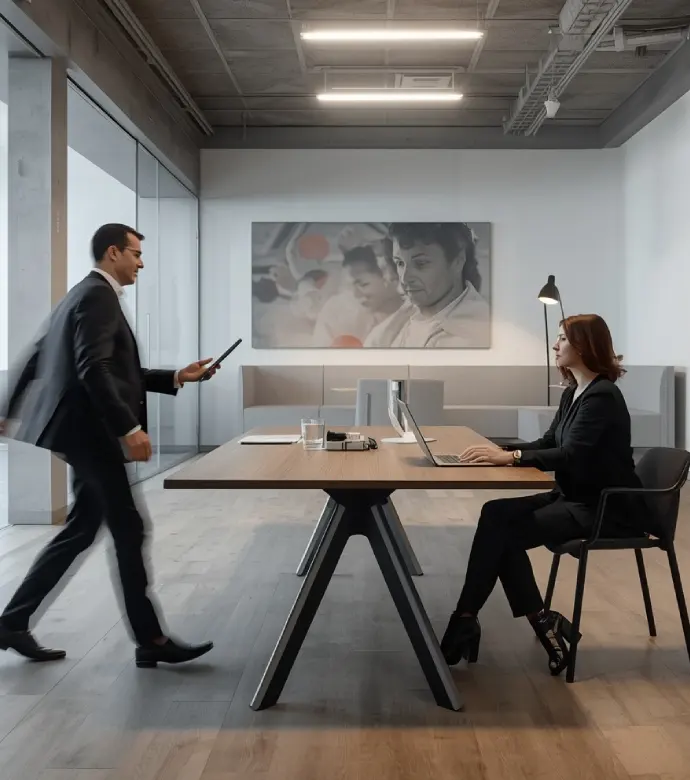
Why are we not building a corporation?
Company philosophy.
-
- simple communication,
- no excessive procedures,
- focus on results,
- organizational flexibility,
- rapid implementation of changes.
Speed of action is an advantage
As they grow, many companies increasingly begin to resemble bloated administrative structures. New management layers, procedures, formalities, and processes emerge, created primarily to maintain the organization itself.
At GAUS, we deliberately chose a different path.
We do not build a corporation "for show." Our goal is not to create a heavy organizational structure, but a modern, flexible, and effective mid-sized company capable of responding quickly to the changing needs of the market and industrial clients. In today's economic reality, flexibility is of immense value. Markets shift faster than ever before, supply chains can change from month to month, and client needs demand ever-greater speed of action and adaptability.
Therefore, we believe that:
- small means flexible,
- flexible means fast,
- fast means effective, and effectiveness builds stability and organizational resilience.
This approach impacts the way we work every day. We reduce unnecessary procedures, simplify communication, and focus primarily on solving our clients' real problems, rather than expanding internal structures.
As a result, we can implement new solutions faster, develop projects more efficiently, and flexibly adapt our offer to the changing industrial and logistical reality.
This business philosophy also carries great weight for the people who make up GAUS. Working in a smaller, dynamic organization, it is much easier to see the meaning behind your own work, influence the company's direction of growth, and participate in actual changes, rather than merely executing a tiny fragment of a large process.
We believe that the future belongs to organizations capable of rapid learning, decision-making, and adapting to change. The biggest player does not always win. Very often, it is the one who can act faster, smarter, and closer to the real needs of the market that succeeds.
That is why at GAUS, we develop a company that remains modern, effective, and flexible — regardless of scale.
What does responsibility look like at GAUS?
Trust and independence.
-
- independent project and task management,
- direct client contact,
- organization of one's own work,
- responsibility for results, not just "checking off tasks."

We trust people who want to take action
In many organizations, responsibility ends with completing a checklist of tasks. The process is deemed more important than the outcome, and independence is often limited to executing predetermined instructions.
At GAUS, we work differently.
We believe that the best results are achieved by people who understand the meaning behind their work, have the space for independent action, and possess a real impact on the processes they manage. That is why, from day one, we focus on trust and responsibility for the final outcome, rather than simply "checking off" boxes in a system. Working in our environment requires self-reliance, strong organizational skills, and decision-making ability. We cooperate with industry, logistics, and processes responsible for supply continuity, so many situations demand fast reactions, active problem-solving, and efficient performance under time pressure.
This is exactly why you learn business responsibility very quickly at GAUS. You are not just an order-taker — you become a part of processes that genuinely affect both our clients and our organization.
Direct contact with people and clients also plays a major role. This makes it easier to understand that business is not a collection of procedures, but a network of interdependencies, decisions, and cooperation between human beings. Such a work model brings great satisfaction, but it also requires maturity and commitment. Independence does not mean being left alone with a problem. It means having the freedom to act while having the full support of the team and people with practical experience.
That is precisely why we value individuals who want to grow, can take ownership of their actions, and are not afraid to make decisions. Because a modern organization does not thrive on rigid procedures, but thanks to people who can operate independently and think beyond the scope of their own position. At GAUS, we do not expect perfection from day one. We expect engagement, a desire to develop, and a readiness to act. The rest comes with experience.
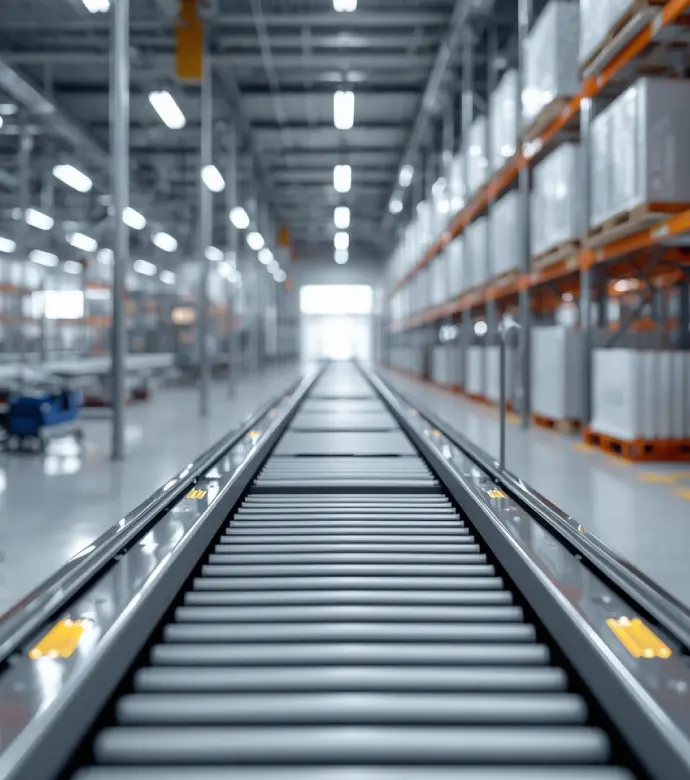
From logistics to technology
The modern character of the company.
-
- development of proprietary solutions,
- process automation,
- systems supporting purchasing and logistics,
- combining operations with technology.
Modern logistics is all about technology
Most trading and logistics companies focus solely on sales, warehousing, and delivery organization. At GAUS, we have always looked at this area from a broader perspective. We believe that modern logistics and purchasing organization cannot function today without technology and process automation. That is why, alongside our trading and logistical activities, we also develop our own software engineering capabilities and proprietary IT solutions supporting industry and supply chain management.
It is this very synergy that sets us apart in the market.
We are one of the few companies in the industry that combines hands-on operational experience with in-house software development. We do not create technology that is "detached from reality." We build solutions based on real problems that we observe every day while working with industrial clients, logistics, and purchasing processes. This allows us to develop systems that genuinely streamline work organization, increase process security, and help clients reduce risks and costs associated with supply management.
Our IT solutions are born in an environment where technology meets practice. Developers collaborate with people operationally tied to logistics, warehousing, trade, and industry. This is a very different approach from creating systems solely from behind a desk or based on theoretical assumptions. In practice, this means an organization that not only responds to market needs but can independently create tools that address new challenges in industry and logistics. This also carries immense value for the people working at GAUS. The opportunity to observe how real business processes intertwine with technology and automation offers a much broader perspective on modern business than the classic division into "IT" and "operations." Because the future of modern organizations lies not just in selling products or services. It lies in the ability to combine technology, logistics, and a practical understanding of business processes into a single, smoothly functioning organism.
What do we learn from working with industrial clients?
Competencies gained within the company.
-
- process organization,
- business communication,
- priority management,
- solving operational problems,
- responsibility for supply continuity.
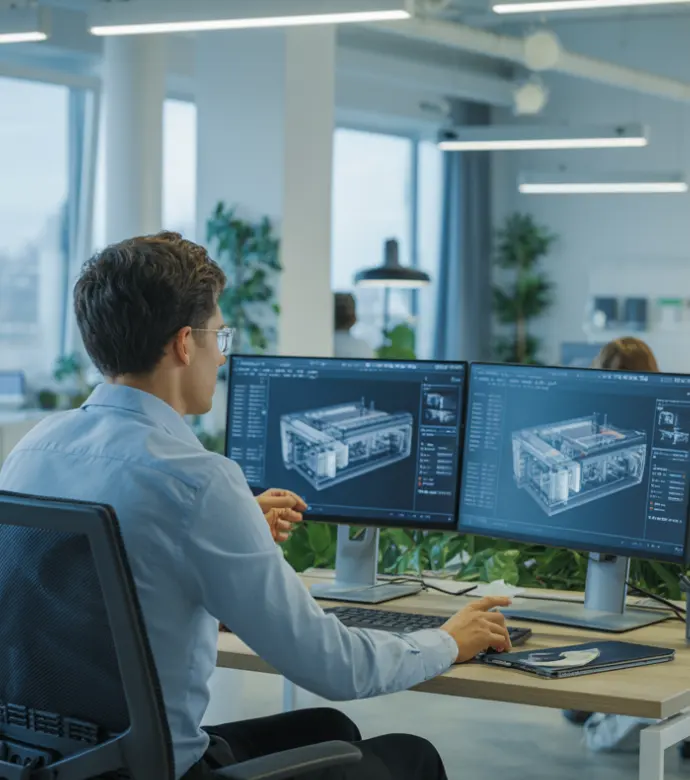
Skills that stay with you for years
Working with industry teaches you one thing very quickly — business reality rarely unfolds according to perfect scenarios. Production does not pause just because "the system predicted a delay." A client cannot suspend deliveries because someone lacked the time to make a decision. Operational problems do not wait for a convenient moment. This is precisely why the experience gained from working with industrial clients develops competencies that are difficult to learn solely through studies or training sessions.
At GAUS, we work every day with processes responsible for supply continuity, logistics organization, and production component management. This is an environment that teaches not only technical or organizational knowledge but, above all, practical thinking and business responsibility. Very quickly, you begin to understand how crucial strong work organization, the ability to prioritize, and efficient communication between people and departments truly are. You learn to perform under time pressure, react to shifting situations, and look for solutions instead of focusing exclusively on the problems.
This experience also changes how you view business and the economy. Suddenly, it turns out that behind seemingly simple everyday products lies an immense number of processes, interdependencies, and logistical decisions. You realize that production continuity very often depends on things most people never even notice. Working in such an environment offers something else as well — great humility toward operational reality. It highlights the difference between theory and practice and teaches that effective solutions must work not in a presentation, but in a real production environment.
This is exactly why the competencies gained at GAUS stay with people for years. Because they are not merely a set of procedures or theoretical knowledge. They are practical experiences stemming from working with real processes, clients, and challenges of modern industry. And regardless of how your professional career develops further — the skills of organization, responsibility, cooperation, and problem-solving remain a lifelong asset.

The people who make up GAUS
A more emotional article about work culture.
-
- partnership,
- mutual support,
- responsibility,
- collective company growth.
A company is made of people, not procedures
A modern company can be built on technology, capital, and process organization. All of these elements are important. But in hindsight, we see one thing ever more clearly — the hardest thing to build is a good, stable team of people.
Technology can be bought. Capital can be raised. Processes can be designed.
The greatest challenge always remains relationships, trust, and a work environment where people truly want to grow and build the organization together. That is why at GAUS, from the very beginning, we try to create a company based not only on business efficiency, but also on partner-driven relationships and mutual respect. We believe that a stable team is not created by HR procedures or trendy slogans about "organizational culture." It is born when people feel part of something bigger, have a sense of security, opportunities for growth, and the awareness that their work truly matters. The atmosphere of cooperation is very important to us. One where you can ask questions, exchange knowledge, learn from each other, and solve problems together. Without unnecessary competition, corporate distance, or building artificial divisions.
In practice, this also means understanding that professional growth is hard to separate from personal development. People spend a massive part of their lives at work. This is where they build self-confidence, learn responsibility, cooperation, communication, and how to handle challenges. A work environment can either support these processes — or effectively destroy them.
Therefore, the owners of GAUS view building a healthy work atmosphere also as a personal social responsibility. Not just toward the company, but above all toward the people who co-create it.
We believe that a modern organization should be a place that helps people develop competencies, build professional maturity, and gain experiences useful not only at work, but also in everyday life.
Because ultimately, it is not procedures, systems, or structures that make a company. A company is always made of people.
At GAUS, we are not just looking for employees. We are looking for people who want to join us in building a modern, ever-better company...